High-Quality Compression Outlet Brass Adapters
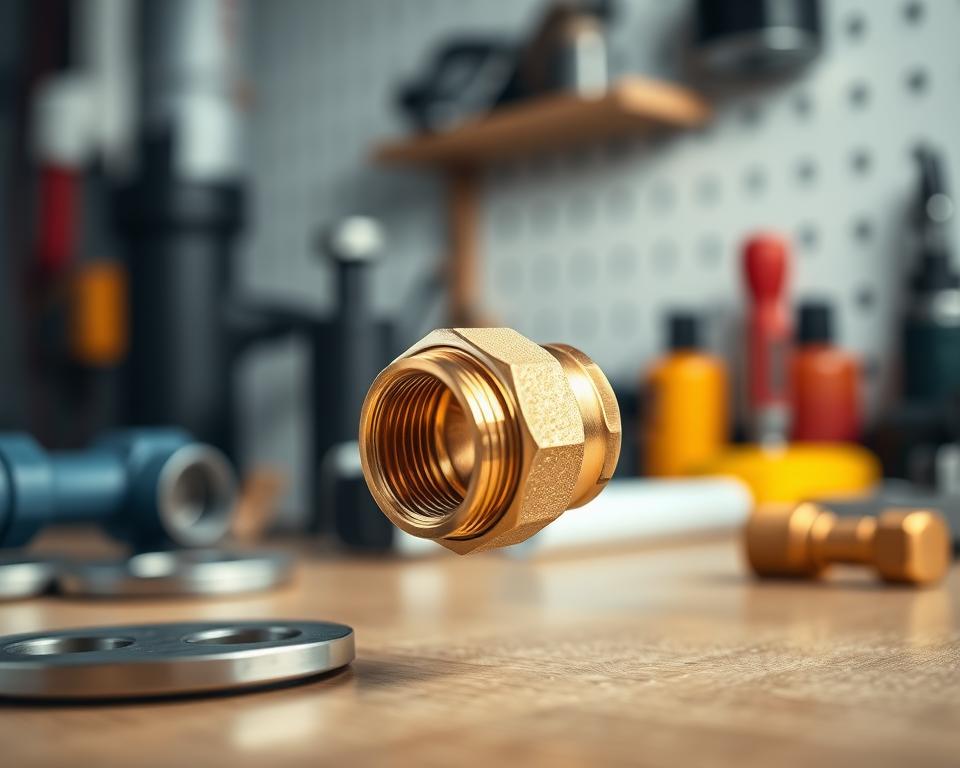
Compression outlet brass adapters are vital for maintaining reliable plumbing supply lines. They join outside-diameter (OD) tubing to threaded outlets, helping create leak-resistant joints. That function is critical for appliances including icemakers and refrigerators. Brass is a popular material choice because of its strength and ease of installation.
This page explores the female to female water line adapter for use with 3/8 and 1/2 OD tubing. These adapters are in frequent demand among contractors and homeowners for different fixtures. They come in formats including straight adapters, MIPS and FIPS threaded exits, unions, and reduction fittings.
Installers benefit greatly from having reliable wholesale options available. Installation Parts Supply offers a wide range of brass compression fittings. They support both single-piece and bulk purchasing, helping maintain competitive pricing. In the following sections, we’ll cover compliance with the Safe Drinking Water Act as well as California Proposition 65. You’ll also see technical guidance on installation and practical leak-prevention tips.
Main Takeaways
- Compression outlet brass adapter joins OD tubing to threaded connections for supply lines.
- For icemakers, refrigerators, and RO systems, brass compression adapters are commonly preferred.
- The 3/8 water line adapter is one of the most common sizes for appliance supply connections.
- Wholesale options from Installation Parts Supply include everything from single pieces to large bulk orders.
- Later sections detail compliance, installation best practices, and troubleshooting.
Why choose brass compression fittings for plumbing projects
Many plumbers and homeowners favor brass compression fittings. Their main advantages are long-lasting performance and reliable sealing. This makes them ideal for supply lines and outlet connections. Brass compression fittings are machined consistently with tight tolerances, which supports durable joints.
Durability And Corrosion Resistance Of Brass
Because brass resists rust, it performs very well in wet conditions. Such resistance helps ferrules seat correctly and reduces the chance of threads seizing. A brass compression nut holds torque over time without cracking, ensuring leak-free connections under normal conditions.
How Brass Compression Fittings Work With Copper, PVC, And PEX
Brass compression connectors mate easily with copper tubing and can adapt to plastic lines when the right sleeves or inserts are used. Many manufacturers supply transition parts that join PEX, PVC, or copper while avoiding excessive stress on the tubing. It’s essential to use the correct insert or sleeve to avoid deforming softer plastics.
Why Brass Beats Plastic And Steel For Supply Lines
Brass delivers stronger threads and can handle higher temperatures and pressures than most plastic fittings. Against steel, brass is less prone to corrosion in potable water systems and reduces galvanic reaction risks with copper. When attaching an icemaker or refrigerator line, using a brass 3/8 to 1/2 supply line adapter both simplifies installation and provides a sturdy connection.
Compression Outlet Brass Adapter Overview
The compression outlet brass adapter is used to connect tubing to threaded or alternative outlet connections. It is a compact brass fitting that simplifies transitions from compression tubing to pipe threads or valve inlets. It is ideally suited for refrigerator and icemaker hookups, reverse osmosis outlets, and humidifier lines. This adapter helps create a secure 3/8 compression-to-1/2 threaded style connection.
What It Is And Where It’s Used
A compression outlet adapter uses a compression nut and ferrule for a secure seal. The outlet side is typically an adapter exit like FIPS, MIPS, or NPT. To skip soldering or flaring on 3/8″ or 1/2″ OD supply tubing, plumbers commonly use this type of adapter.
It’s commonly used for connecting 3/8″ OD water supply lines to refrigerator water valves. It’s also used for tying an RO system into a household line and linking humidifiers to a cold water feed. Installers prefer brass due to its durability, corrosion resistance, and consistent torque behavior as the compression nut is tightened.
Common configurations: compression entry to adapter exit
Standard setups usually combine a compression entry on one side with a threaded exit on the other. For example, 3/8″ OD comp to 1/4″ FIPS for small appliance inlets, and 3/8″ OD comp to 3/4″ MIPS for larger valves. Union reduction compression adapters allow stepping between tubing sizes or alternate thread types without specialty tooling.
Installers also encounter versions labeled as 3/8 compression fitting to 1/2 threaded exits for various supply line conversions. This 3/8 x 1/2 adapter style is frequently used on fixtures where the supply tube diameter is smaller than the inlet.
Example Specifications And Distributor Listings
Distributor catalogs present compact parts with detailed specs and dimensions. You’ll commonly see listings such as 3/8″ OD comp x 1/4″ FIPS and 3/8″ OD x 3/4″ MIPS. A typical compact adapter measures roughly 30 x 18 x 15 mm and weighs near 0.04 kg, useful for tight under-sink installs.
Search terms like Compression Outlet Brass Adapter, compression outlet adapter, 3/8 to 1/2 adapter plumbing, or 3/8 x 1/2 adapter will return matching parts. Choosing the right adapter reduces fitting changes and speeds up repairs when working with mixed tubing and thread types.
Sizes and connection types: 3/8 to 1/2 and 1/2 to 3/8 adapters
To choose the right adapter, you must match the tubing’s outside diameter to the fitting’s thread size. Compression fitting sizes always reference the tubing’s OD. For example, a 3/8″ OD tube requires a 3/8″ compression nut and ferrule. Threaded ports follow standards such as NPT, MIPS, or FIPS, each with its own label. Always confirm that the compression side matches the tubing OD and the threaded side aligns with the pipe or appliance threads.
Understanding OD vs thread sizing
The size of a compression fitting is based on the tubing’s outside diameter. For example, a 3/8″ compression fitting fits 3/8″ OD copper or PEX tubing. Pipe threads, though, are nominal and often larger than the actual bore. For instance, a 1/2″ pipe thread will not match a 1/2″ tubing OD. Be sure to verify both OD and thread labels prior to purchasing.
Common Part Labels And What They Mean
Most vendors use clear labels, for example 3/8 x 1/2 adapter, to show a 3/8″ OD compression end and a 1/2″ threaded end. You’ll see listings like 1/2 inch female to 3/8 male adapter or 3/8 to 1/2 supply line adapter. Many catalogs display both OD and thread type, like 3/8″ OD Comp x 1/4″ FIPS, to avoid confusion.
Choosing The Right Adapter Type
Use a 3/8 to 1/2 male adapter when you need a compression connection on 3/8″ tubing and a male 1/2″ pipe thread. Select a 1/2 female to 3/8 male adapter when joining a 1/2″ female thread to a 3/8″ male compression or pipe side. Selecting the wrong orientation can cause leaks or necessitate additional fittings.
| Adapter Label | Tubing/Compression Side | Thread Connection Side | Typical Application |
|---|---|---|---|
| 3/8 x 1/2 brass adapter | 3/8″ OD tubing | 1/2″ pipe thread (check male/female label) | Connecting supply lines to appliances that have 1/2″ ports |
| 1/2″ female to 3/8″ male adapter | 3/8″ male compression or pipe | 1/2″ F pipe thread | Connecting an existing 1/2″ female port to a 3/8″ feed line |
| 3/8″ to 1/2″ supply line adapter | 3/8″ OD compression tubing | 1/2″ threaded inlet/outlet | Transitions for reverse osmosis or fridge water lines |
Distributors offer a wide range, from 1/8″ to 3/4″ OD. Be sure the part label matches your tubing’s OD and the appliance thread specification. When in doubt, measure the tubing OD and confirm the thread type before ordering. When dealing with water service taps, confirm whether you need a 1/2 to 3/8 water line adapter or a 3/8 to 1/2 threaded adapter to prevent extra rework.
Adapter functions: supply line, water line, and outlet connections
Compression outlet brass adapters convert tubing to threaded inlets and shutoffs. They allow a 3/8 water line adapter to connect to appliance fittings, service valves, or branch points. This arrangement is common for feeding ice makers, refrigerators, reverse osmosis systems, and whole-room humidifiers.
For icemakers and refrigerators, 3/8″ OD tubing is typically used. A 3/8 to 1/2 supply line adapter or a 1/2 to 3/8 supply line adapter bridges tubing and appliance threads. These adapters let installers join compression tubing to appliance inlets or add a shutoff via a brass compression valve.
Reverse osmosis units and humidifiers often need small-OD connections. A common setup is using a 3/8 OD comp x 1/4 FIPS fitting for branch feeds or needle valve connections. This pattern also supports quick hookups for pet water dispensers, swamp coolers, and patio misters.
Needle valves and self-piercing kits provide field-friendly tapping options. These self-piercing needle valve kits clamp on 3/8″–3/4″ inlet piping and furnish a 1/4″ compression outlet. Such kits typically include brass inserts or plastic sleeves to protect the tubing and help ensure a leak-free seal when used with a compression outlet.
Below is a quick comparison to help choose the right adapter or valve for common tasks.
| Application | Typical Adapter/Fitting | Usage Notes |
|---|---|---|
| Fridge / Icemaker | 3/8 water line adapter, 3/8″ OD compression to appliance inlet | Ideal if the appliance accepts 3/8 compression or you must convert threads |
| Supply Line Step-Up/Down | 3/8–1/2 or 1/2–3/8 supply line adapter | Matches tubing OD to larger shutoff valves or supply branches |
| Reverse osmosis branch | 3/8 OD comp x 1/4 FIPS adapter | Feeds RO post-filter or accessory fittings without soldering |
| Accessory tap | Self-piercing valve with 1/4″ compression outlet | Fast installation; use inserts or sleeves to protect plastic tubing |
| Shutoff control | Brass compression valve | Durable, serviceable shutoff that pairs with compression adapters |
Anatomy Of Brass Compression Fittings
This guide explains the parts involved in working with compression fittings. Understanding each component is key to selecting the correct brass compression connector or adapter for various applications.
A standard compression setup has three core parts: the compression nut, the sleeve or ferrule, and the fitting body. The ferrule is driven into the body as the brass compression nut is tightened. When compressed, the ferrule seals against the tubing OD with a metal-to-metal connection.
Ferrule design plays a critical role in sealing performance. A single-piece brass ferrule is ideal for copper and soft metal tubing. For plastic tubing, a Delrin sleeve or brass insert is necessary to prevent damage and ensure a tight seal. Suppliers offer these components in various sizes, including 1/4″, 3/8″, and 1/2″ OD.
Each component serves a distinct function. A brass compression connector connects two lengths of tubing with the same OD. To join two tubing sections in line, a brass compression coupling is used. A compression outlet adapter changes a compression connection to a threaded outlet for fixtures or appliances. A female to female water line adapter connects two male-threaded components without altering the tubing.
Wholesalers supply compression nuts and sleeves in sizes from 1/8″ to 3/4″ OD, sold on a per-piece basis. Note that the compression nut itself does not come into direct contact with the water. Instead, the ferrule and fitting body form the primary fluid path. This detail is significant when selecting materials for potable water applications.
- When to choose brass ferrules: use on copper or metal tubing for long-lasting seals.
- When to use plastic sleeves or brass inserts: use them with PEX or soft plastic tubing to prevent pinching and leaking.
- Choosing adapters: select a compression outlet adapter for appliance feeds, a brass compression coupling for inline sections, and a brass compression connector for same-OD connections.
Installation Best Practices For Compression Fittings And Adapters
Proper brass compression fitting installation starts with clean, square cuts and the right components. A quality tubing cutter is essential to avoid oval ends. It’s important to remove burrs from inside and outside the tube for even ferrule seating. Ensure the outside diameter of the tube matches the ferrule and nut size. Plastic tubing often requires a plastic sleeve or brass insert for reliable sealing.
- Cut the tubing square and confirm it with a square or cutting guide.
- Deburr both the inner diameter (ID) and outer diameter (OD) to prevent leaks and ferrule misalignment.
- Verify the tubing OD matches the ferrule specification before assembly.
- For PEX or soft plastics, add the recommended sleeve or insert.
Guidelines For Tightening Fittings:
- Begin all threaded connections by hand so you can avoid cross-threading.
- Tighten the compression nut by hand first before using a wrench.
- Most manufacturers recommend finishing with a wrench, turning the compression nut about 1/4 to 1/2 turn past hand-tight.
- Avoid over-tightening, as too much torque can deform the ferrule and lead to leaks.
Guidance On Using Thread Sealants:
- Do not apply thread sealants to compression threads; the ferrule makes the seal and sealants can interfere with proper seating.
- For pipe-threaded portions like NPT or IPS fittings, use PTFE tape or approved joint compound.
- For combinations such as a 1/2 female compression to 1/2 male NPT adapter, keep the compression side clean and seal the NPT threads with PTFE tape or an approved joint compound.
- For high-pressure pipe threads, manufacturers may recommend specific joint compounds or thicker PTFE tape; follow those recommendations.
| Installation Step | What To Do | Why it matters |
|---|---|---|
| 1 | Cut square and deburr tubing | Prevents ferrule misalignment and leak paths |
| 2 | Confirm tubing OD and choose the correct ferrule and nut | Ensures a correct mechanical fit and seal |
| 3 | Start threads by hand and tighten the nut by hand | Helps avoid cross-threading and maintains correct alignment at the start |
| 4 | Use a wrench to tighten the compression nut a further 1/4–1/2 turn | Completes the seal while minimizing ferrule deformation |
| 5 | Avoid thread sealants on compression threads | Maintains ferrule performance; use PTFE or compound on NPT-only threads |
Lead, Compliance For Potable Water, And Safety Considerations
Selecting the correct adapter means balancing safety, regulatory compliance, and your specific application. This guide will cover federal and state regulations, warning labels, and how to pick parts for drinking water versus industrial use.
Lead Limits And Federal Compliance Standards
Under the Safe Drinking Water Act, there are strict limits on lead in products used for drinking water. Modern standards and NSF/ANSI 61/9 demand a low lead content. Look for lead free brass fittings that meet NSF 61/9 or state rules like California’s AB 1953.
Prop 65 Warnings And Safe Handling Practices
California Proposition 65 requires clear warnings on products that may expose users to chemicals causing cancer or reproductive harm. Suppliers such as PlumbingSupply.com and other major distributors post California Proposition 65 notices on brass items containing detectable lead. Always wash your hands after handling non-certified parts and avoid using those parts on potable water lines.
Choosing Parts For Potable Water Vs Industrial Use
For any drinking-water outlet, select a compression fitting certified for potable water. These parts are labeled as lead free brass fittings and show NSF compliance or state approvals. For machinery, irrigation, or other non-potable uses, brass fittings not for potable water may be used if clearly labeled for industrial service.
Reading Distributor Labels And Using Safe Practices
Always check product labels and data sheets before buying. Many distributors clearly mark items as “not for potable water” or provide the relevant NSF certifications. Where code requirements and health concerns dictate, always use certified parts that comply with the Safe Drinking Water Act and local plumbing codes.
Quick Compliance Checklist
- Verify NSF 61/9 or similar certification before using a fitting on drinking water lines.
- Verify labeling that indicates lead free brass fittings and check for any California Proposition 65 warnings.
- Do not use brass fittings not for potable water on household supply lines.
- When in doubt, choose a potable water compression fitting from a reputable manufacturer such as Mueller, Watts, or Nibco.
Examples Of Adapter Parts And Specs From Distributors
Wholesalers and plumbing suppliers offer a wide range of brass compression parts for service and repair. Stock typically includes small ferrules and nuts as well as complete adapters and elbows. This makes it easy for buyers to find matching tubing OD and thread types using common part labels.
Stock Sizes Carried By Wholesalers
Distributors stock compression fitting sizes from 1/8″ to 3/4″ OD. Available increments often include 1/8″, 3/16″, 1/4″, 5/16″, 3/8″, 7/16″, 1/2″, 5/8″, 3/4″, and 7/8″. These sizes fit common supply lines in kitchens, ice makers, and equipment hookups.
Common Catalog Listings And Example Specifications
Catalog entries usually list tubing OD followed by thread type. For example, you might see 3/8″ OD x 1/4″ FIPS or 3/8″ OD x 3/4″ MIPS. Other items include 3/8 male pipe x 9/16 female adapters and union reduction adapters that convert compression connections to adapter outlets.
Part examples and cross-references
Size-transition adapters such as 3/8 x 1/2 are widely used. The 3/8 to 1/2 water supply line adapter is frequently chosen for appliance connections. You can also find less common configurations like 7/16″ OD x 3/8″ MIPS.
Notes On Pricing And Availability
Prices vary by component. Small sleeves and nuts often cost between $1 and $3 each, whereas adapters and elbows commonly range from $4 to $20. Needle valves and specialty items tend to cost more. Bulk discounts are typically available from wholesalers such as Installation Parts Supply.
Order And Delivery Options
Many suppliers list most common stock as available for parcel delivery or in-store pickup. For large orders, shipping is often handled via truck or pallet. Some specialty sizes or branded parts—for example the 3/8 male pipe x 9/16 female adapter—may require extra lead time.
| Item Type | Typical Spec | Approx. Price Range | Common Application |
|---|---|---|---|
| Compression Ferrule & Nut | 3/8″ OD brass ferrule | About $0.75–$2.50 | Provides compression seal on copper or PEX tubing |
| Inline Straight Adapter | 3/8 x 1/2 adapter, brass | $4 – $12 | Step-up or step-down supply line transitions |
| Threaded Adapter | 3/8 M pipe x 9/16 F adapter | $6 – $18 | Connects appliance fittings to male pipe threads |
| Union Reduction Adapter | Union-style reduction compression adapter | Roughly $8–$20 | Compress-to-thread transitions with union |
| Needle Valve (3/16″ OD) | 3/16″ OD needle valve | $12 – $35 | Controls flow in fridge or RO supply lines |
Maintenance, Leak Troubleshooting, And Replacement Tips
Regular maintenance of compression outlet brass adapters is crucial for avoiding unexpected problems. By performing simple checks on visible connections, nuts, and tubing, you can greatly reduce leak risks. These quick inspections can help prevent costly water damage.
To identify leaks in compression fittings, first isolate the line and wipe the joint clean. Look for any signs of moisture, mineral buildup, or corrosion around the compression nut and ferrule area.
The next step is to check ferrule seating. Loosen the nut a bit, then tighten it back to the recommended torque. Many experts suggest hand-tightening and then adding a quarter to half turn with a wrench. If leaks continue, it’s time to disassemble the fitting and inspect the ferrule for damage or misalignment.
When to replace ferrules or swap the adapter
Replace ferrules whenever they show deformation, deep scoring, or cannot seat correctly. A damaged ferrule will often cause leaks to recur despite torque adjustments.
For more serious problems such as stripped threads, internal corrosion, or non-compliance with potable-water standards, replacing the entire adapter is best. Ensure that replacement parts match in OD and thread size for a proper fit.
Preventive maintenance for water supply lines
To keep water supply lines reliable, regular preventive maintenance is essential. Inspect lines every six months for leaks, loose nuts, and signs of stressed tubing. Don’t forget to inspect the condition of plastic sleeves and brass inserts when plastic tubing is used.
Keep a small repair kit handy with common ferrules, nuts, and a spare adapter. Quick repairs help minimize downtime and exposure to water.
| Inspection Check | What to look for | Recommended Action |
|---|---|---|
| Visual Inspection | Wet spots, white mineral scale, discolored metal surfaces | Dry the area, note the location, and recheck ferrule seating |
| Torque verification | Nuts loose or over-tightened signs | Tighten to spec—hand-tight plus a small wrench turn—and recheck for leaks |
| Ferrule Condition | Deformation, scoring, uneven bite marks | Replace the ferrule; if the leak returns, replace the adapter |
| Adapter body | Signs of stripped threads, internal corrosion, or non-compliance with lead rules | Swap the entire adapter for a compliant compression outlet brass adapter |
| Plastic Tubing | Missing sleeves, crushed tubing, or poor fit at the ferrule | Install plastic sleeve or brass insert, replace damaged tubing |
- When diagnosing compression fitting leaks, proceed methodically from simple checks to more complex ones.
- Keeping matching ferrules and nuts on hand for quick replacement of failed ferrules will save time.
- Documenting torque values and part numbers helps with future compression outlet brass adapter maintenance.
Where To Buy Wholesale Compression Outlet Brass Adapters In The United States
Contractors and shops seeking bulk brass compression adapters often turn to Installation Parts Supply. They offer both single pieces and bulk orders across the country. Their inventory includes essential parts like 3/8″ OD compression x 1/4″ FIPS, 3/8″ OD x 3/4″ MIPS, and 3/8″ male pipe x 9/16″ female. They also supply ferrules, nuts, and needle valve kits to round out any installation.
Other reliable sources are hardware wholesalers and plumbing specialty suppliers such as PlumbingSupply.com and PlumSource. Major online marketplaces are also options. Suppliers generally support in-store pickup, parcel shipping, and pallet or truck delivery for bigger orders. This flexibility makes it easy to find 3/8 to 1/2 adapter plumbing wholesale or to request bulk pricing on 1/2 female to 3/8 male adapters.
When purchasing wholesale compression outlet brass adapters, it is important to review the specifications carefully. Look for compression OD, thread type (NPT, MIPS, FIPS), finish, and potable-water certifications like NSF or lead-free compliance. For bulk orders, inquire about quantity discounts and current stock levels. For urgent projects, many wholesalers keep 3/8″ and 1/2″ sizes on hand with no minimum purchase required.
Installation Parts Supply provides detailed product lists, pricing, and compliance information specifically for potable applications. That level of detail makes it easier to compare options and confirm correct fit. Planning ahead and verifying specifications reduces returns and speeds up installations. Purchasing brass compression adapters in bulk from trusted distributors is practical and cost-effective, thanks to clear part data and transparent availability information.